Ricky Frank
How I do it
The basic process of painting "grains of glass" and creating layers within my wire cells
The Making of a Cloisonne´ Enamel
It takes many skills and steps to move from imagination to a finished piece of jewelry!
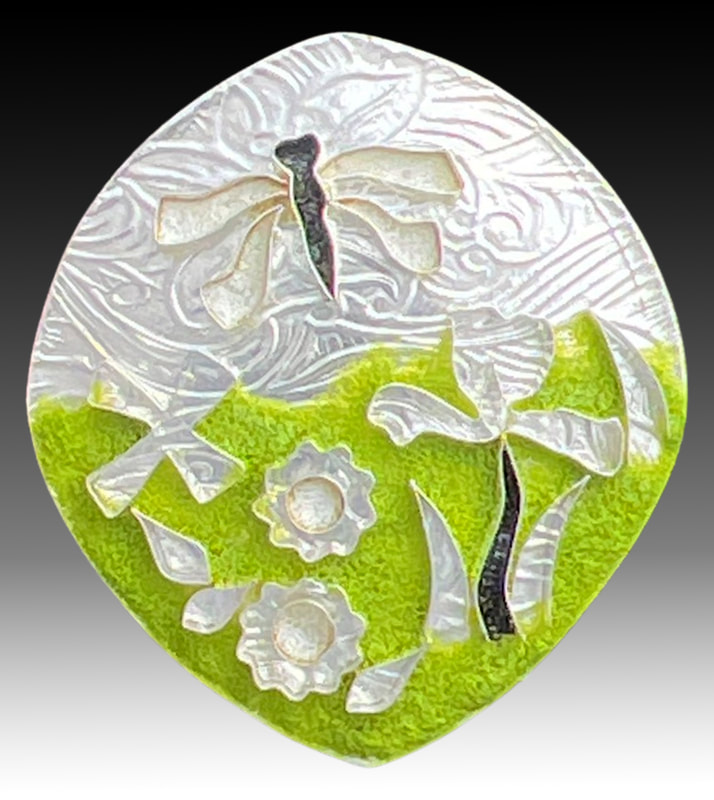
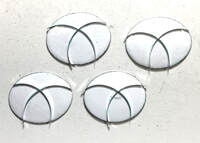
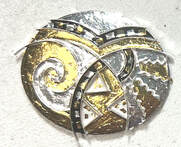
Cloisonne´ wires and background opaque color layers are created and fired.
|
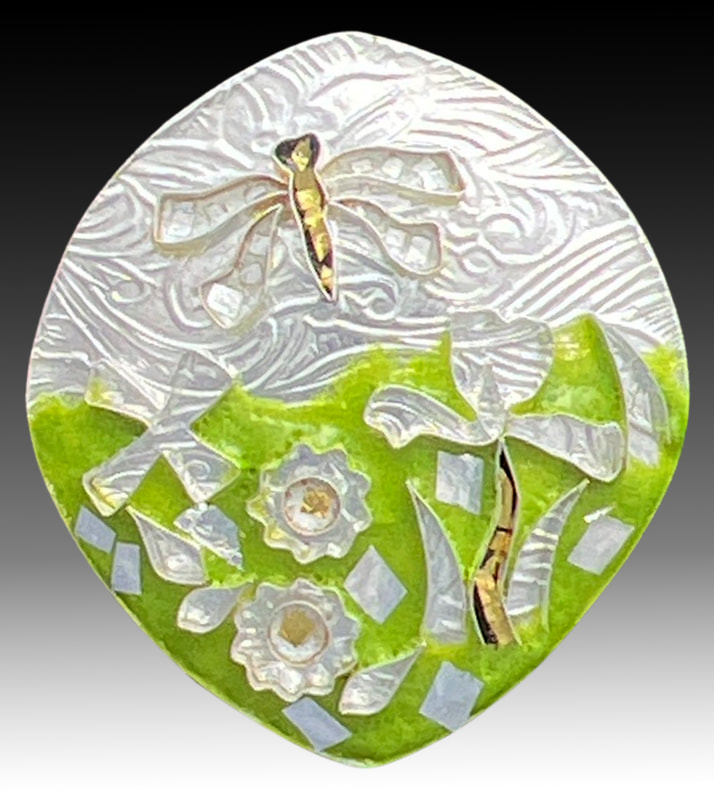
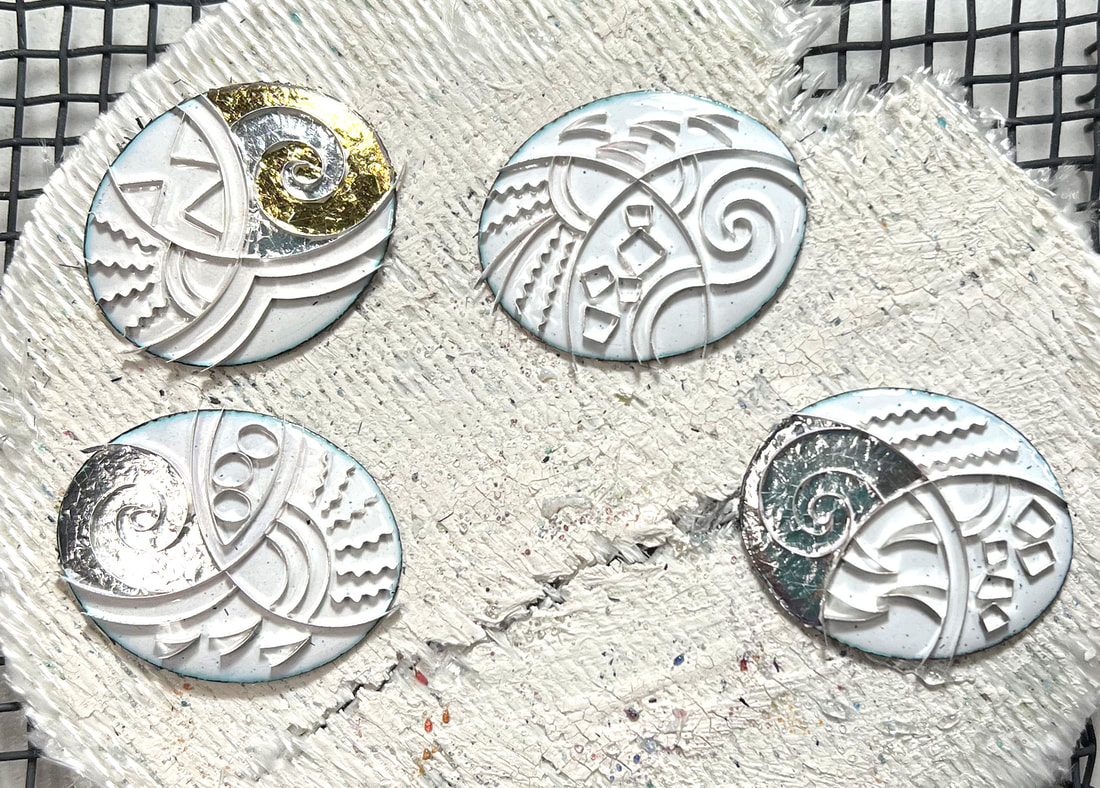
Gold and Silver foil elements added to reflect light and create contrast with opaque colors.
|
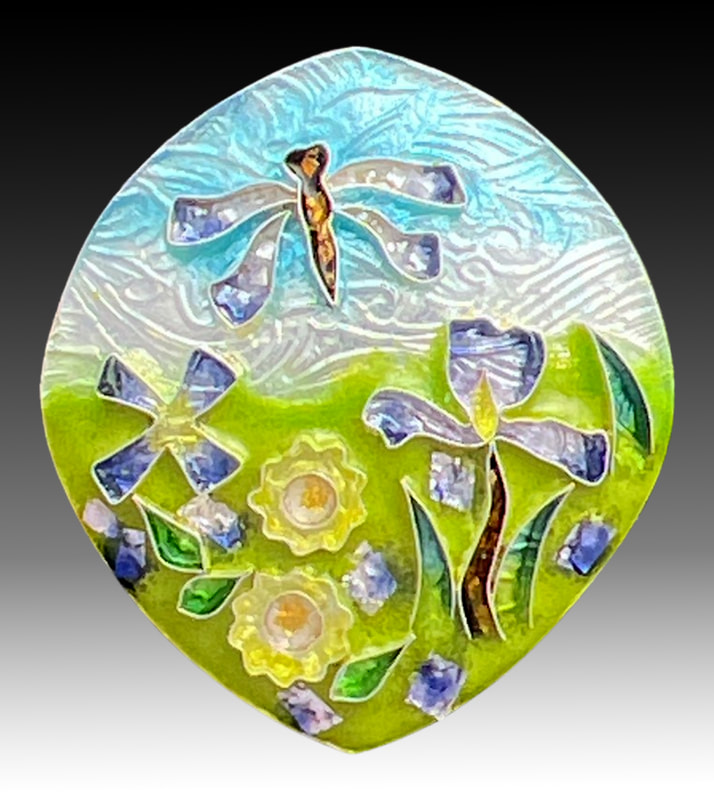
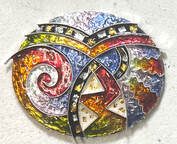
First layer of colors fired. Thin layers are built up to create maximum color transparency.
|
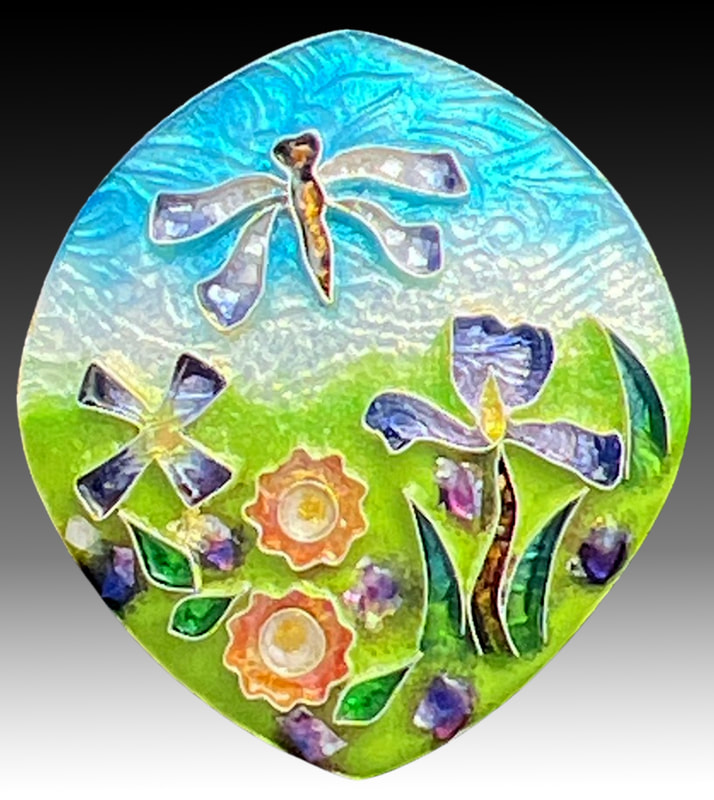
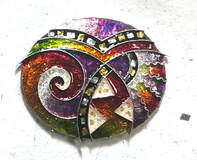
Second layer of colors fired. Time to make color changes: darken areas and change colors.
|
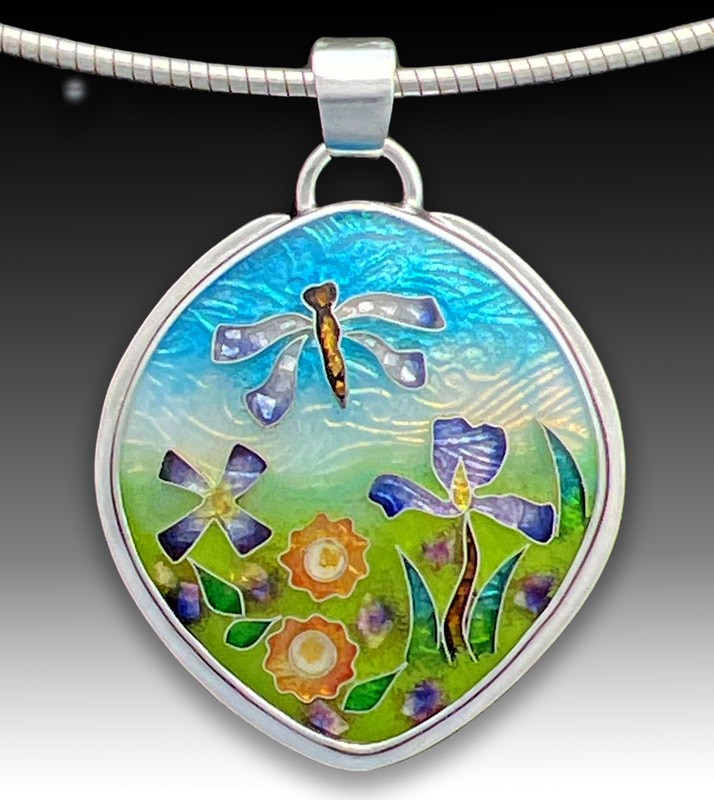
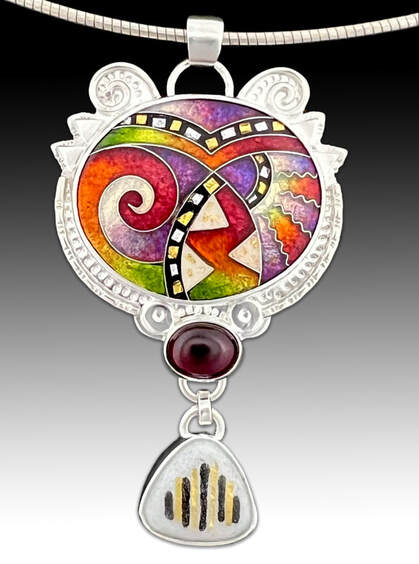
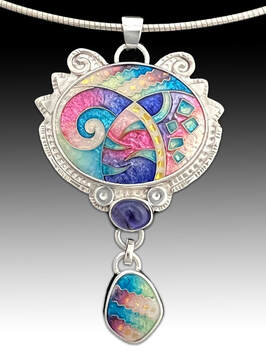
After multiple layers and polishing, final piece is placed into a handcrafted pendant setting.
|
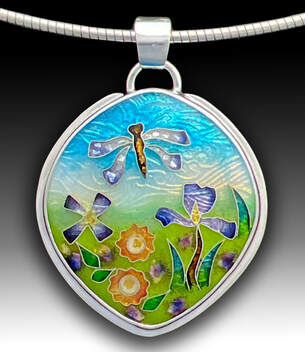
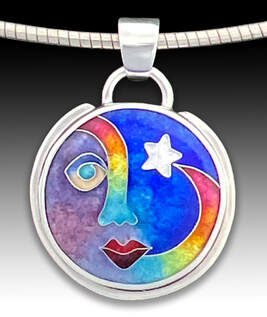
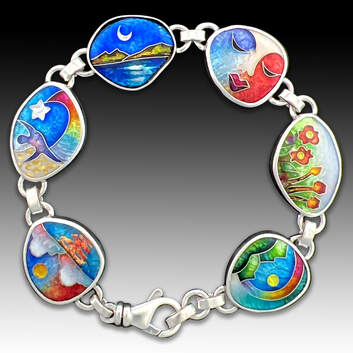
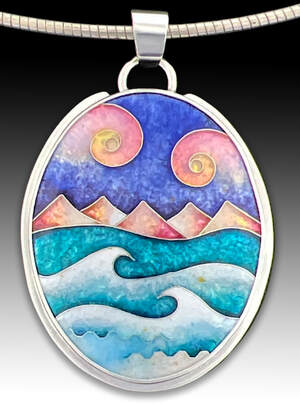
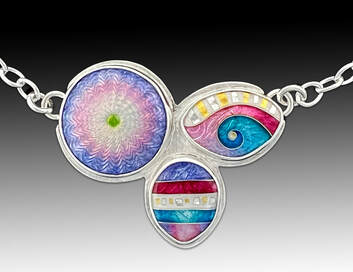
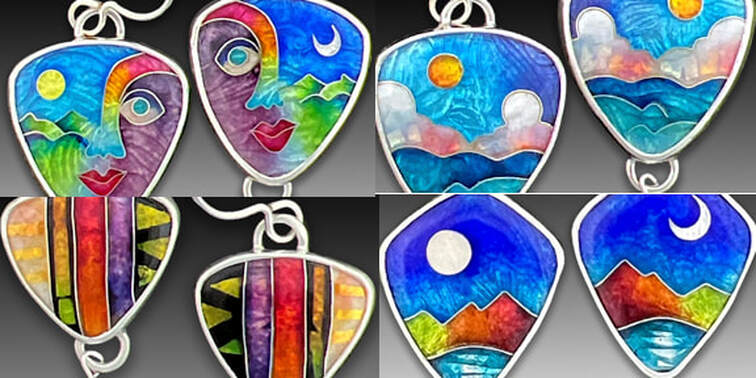
The Doodle Collection
From Idea to Enamel
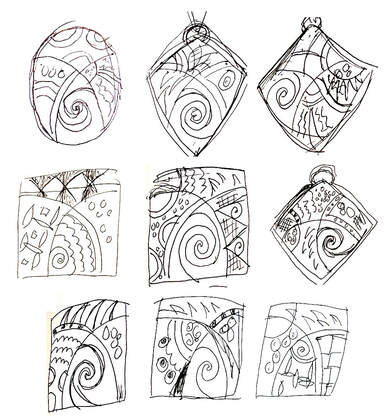
Sometimes I begin with a sketch and translate the sketch into a finished cloisonne´ piece.
And when I feel more playful and willing to take a risk, I simply play with my wires, colors, and foil as though making a collage. The sketches are simply "starting points to get me excited and inspired to begin..
I ask myself questions and with each firing, a conversation with the piece develops.
I pay attention, listen, and look for exciting images that emerge.
Play with my Visual Questions
How do the lines, shapes, and patterns relate to each other?
What do I like? What can I change? What can I combine? |
|
|
|
|
|
|
|
|
|
|
|
|
Customer Reviews
/
- 1
- 2
- 3
- 4
- 5
Beautiful - as always! The enamel work is some of the more interesting things Ricky is doing at the moment. I am looking forward to wearing it many, many times. (The pieces were a bit larger than I expected, but that is not anything to complain about.) Thank you for the sale, Ricky, but I would have bought it anyway...
Dawn C.
/
- 1
- 2
- 3
- 4
- 5
/
- 1
- 2
- 3
- 4
- 5
The pendant I purchased is one of the most beautiful pieces of cloisonné jewelry that I have ever seen. I hope to purchase more in the future.
Candace E.
/
- 1
- 2
- 3
- 4
- 5
/
- 1
- 2
- 3
- 4
- 5
Ricky’s work is wonderful and this is a gorgeous bracelet. The colors are even more striking in person than in the pictures. I couldn’t be happier.
Barbara B.
/
- 1
- 2
- 3
- 4
- 5
/
- 1
- 2
- 3
- 4
- 5
Another beautiful piece to add to my collection! Will enjoy for many years to come!
Denise W
/
- 1
- 2
- 3
- 4
- 5
/
- 1
- 2
- 3
- 4
- 5
What a wonderful quality Ricky produces, and neither my daughter nor my wife has anything like these in their collections. Can dress up with these, or dress down. Great POP of color, great smiles on their faces!
Jeff B.
/
- 1
- 2
- 3
- 4
- 5
/
- 1
- 2
- 3
- 4
- 5
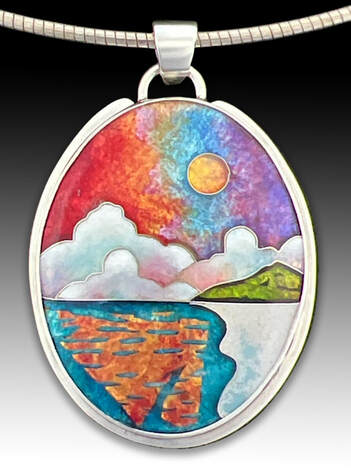
I received the Sunset pendant as a Christmas gift from my husband for Christmas! The colors are magnificent as is the design! I absolutely love it!
Isabel R.
/
- 1
- 2
- 3
- 4
- 5
/
- 1
- 2
- 3
- 4
- 5
The bracelet is absolutely beautiful. I've taken several of Ricky's classes and make a few enamel pieces, but Ricky is the master so I also have given his work to my wife as presents. She will love this and I feel lucky to have seen it in time.
Steve S.
/
- 1
- 2
- 3
- 4
- 5
/
- 1
- 2
- 3
- 4
- 5
Beautiful piece! The colors and shading are amazing, there is a depth to the enamel that doesn’t show in the photos. Just love it!
Sarah N.
/
- 1
- 2
- 3
- 4
- 5
/
- 1
- 2
- 3
- 4
- 5
These earrings are stunning and even more beautiful in person that in the photos. As always- I am delighted by Ricky’s work. So lovely and so well made.
Maureen B.
/
- 1
- 2
- 3
- 4
- 5
/
- 1
- 2
- 3
- 4
- 5
Absolutely beautiful, pictures were awesome but didn't do them justice. I've had them two days, have worn them both days and have had 6 different people comment about how they like them. Art that you can wear, love them thank you.
Deborah G.
/
- 1
- 2
- 3
- 4
- 5
- 0
- 1
- 2
- 3
- 4
- 5
- 6
- 7
- 8
- 9
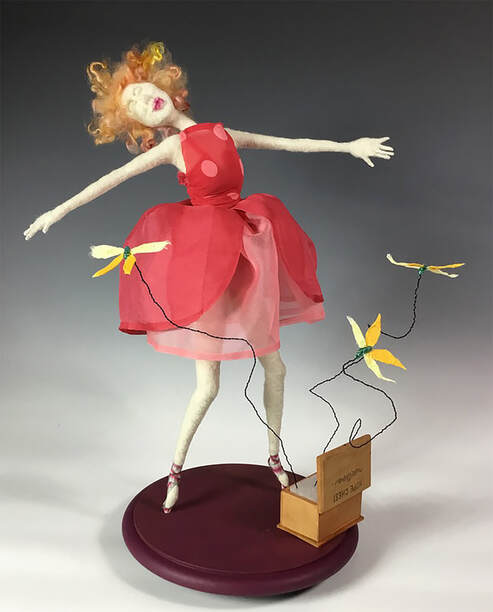
PJ Floyd Mixed-Media Sculptures
|
My talented wife tells mixed-media stories. Drawing upon her background as a choreographer and modern dancer, she combines her needle-felted figures with found and re-purposed elements to share her unique vision of what it means to be a woman in our world..
To lighten things up a little bit, she has developed her "Head South" line of whimsical needle-felted faces. 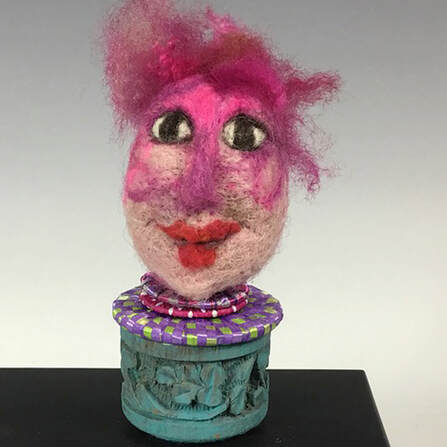
|